Camp Gear Advisor
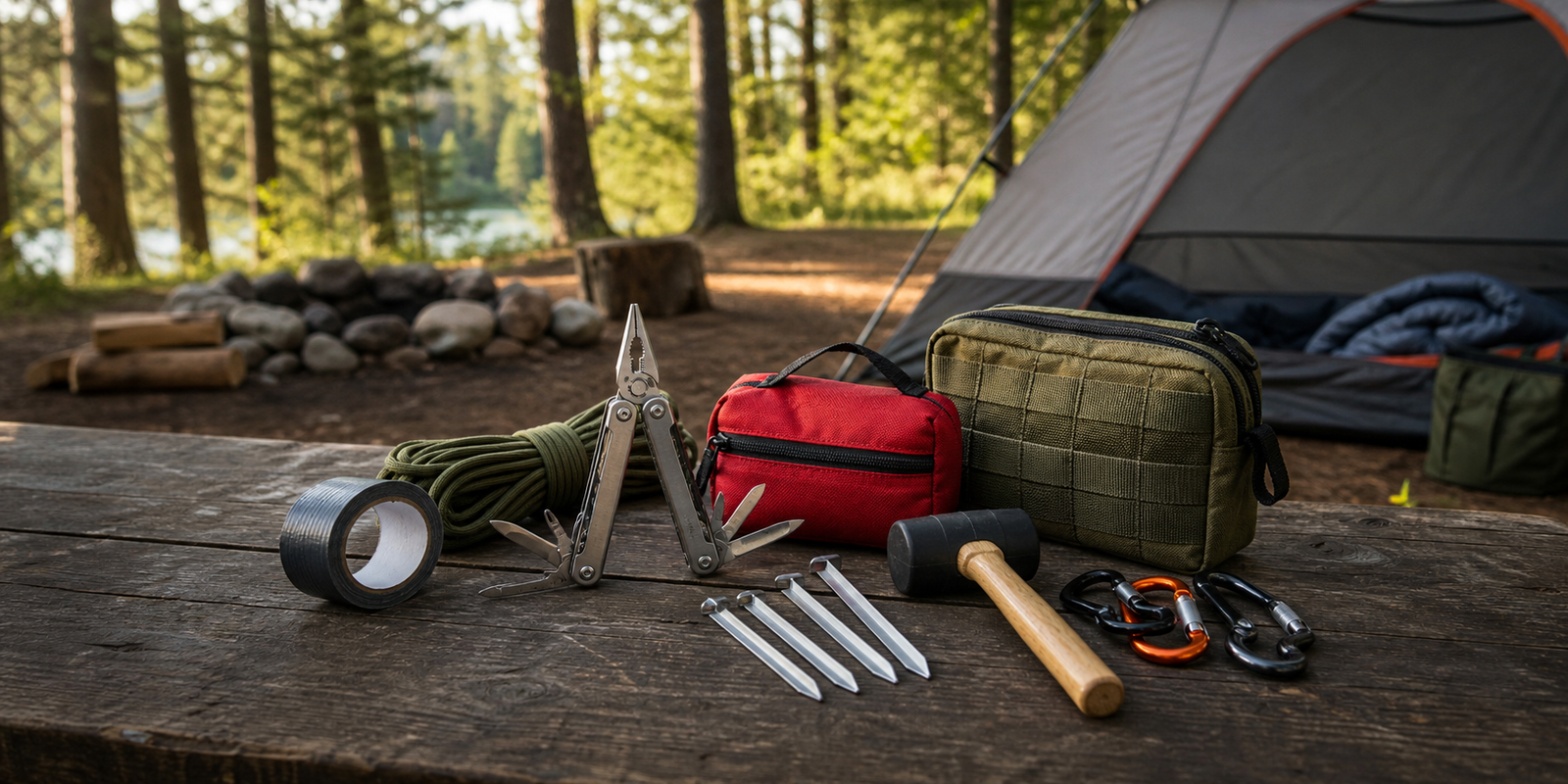
Camping tools and essentials organized near a trail
Back to gear hub

Tools

Tools are easy to overpack, but skipping them completely can make small problems more annoying than they need to be. Most campers only need a few practical extras for setup, quick fixes, and everyday campsite tasks. This page keeps the focus on repair gear, setup helpers, safety basics, and small campsite items, while knives, saws, and axes now have their own guide.

As an Amazon Associate, Camp Gear Advisor may earn from qualifying purchases. Prices and availability can change, so check the product page for current details before buying.

Camp Tools Starter Kit

A simple starter kit for common campsite fixes, setup jobs, and small problems.
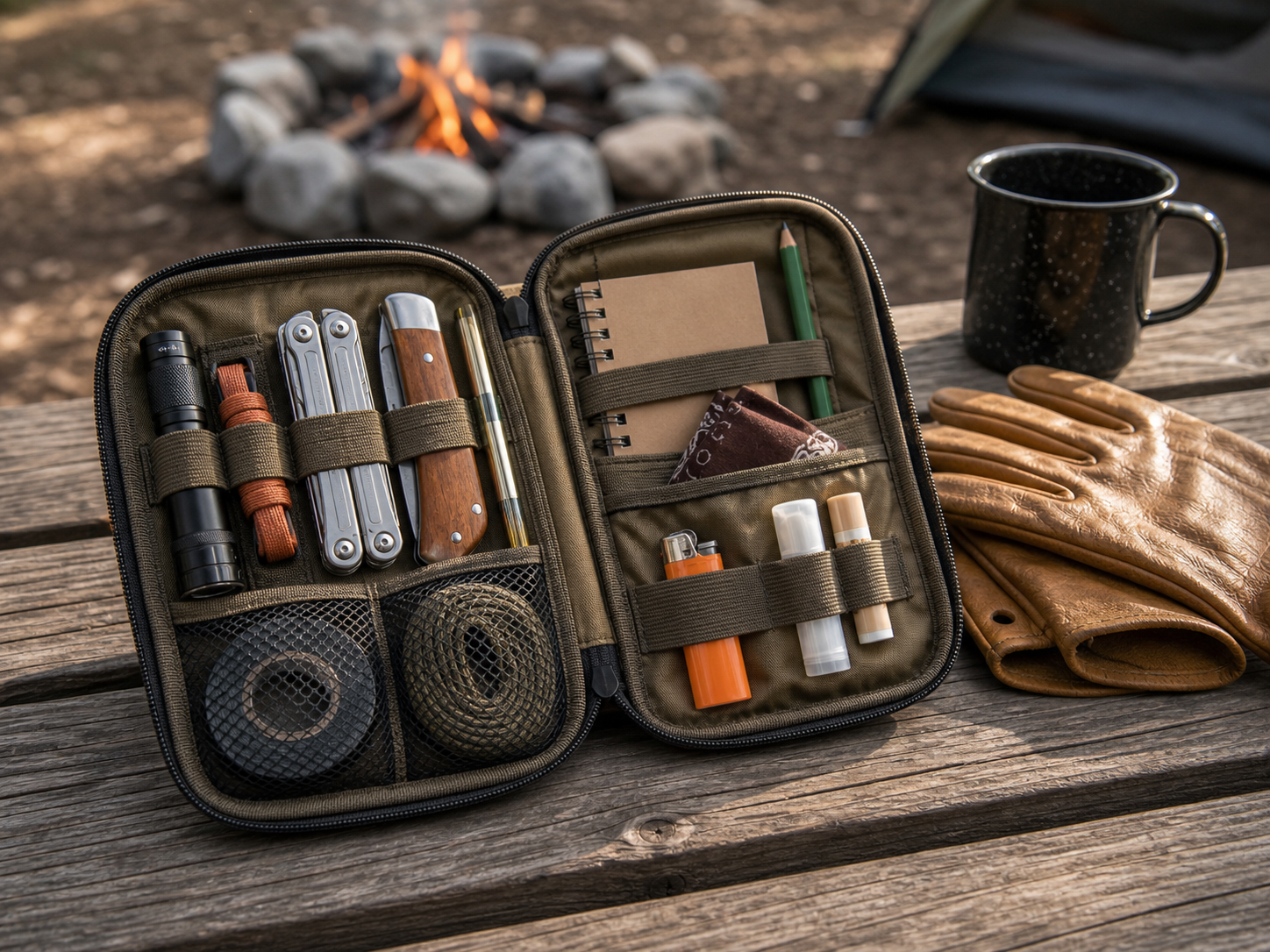
Compact camp tool kit with multitool, flashlight, cord, notebook, and gloves on a campsite table

A good beginner camp tool kit is not about packing every gadget. It is about covering the small problems that can turn annoying fast: a loose tent stake, a torn stuff sack, a splinter, a stuck can lid, or a campsite that gets dark sooner than expected.

Start with the basics you know how to use, keep them together in one pouch or bin, and check them before each trip. The best tools for beginners are simple, durable, easy to find in the dark, and useful across more than one job.

This section is the starting point for campers who want a practical tool setup without overpacking.

Below are complete starter kits for common camp setup, repair, first-aid, and emergency-prep jobs without turning a beginner camp bin into a full toolbox.

1CORE Outdoor All in One Camping KitThe CORE kit is the closest fit for a true beginner camp setup bundle because it groups the unglamorous pieces people forget: stakes, guylines, a mallet with a hook, broom, dustpan, repair patches, and a carry bag. It is most useful for car campers who want one grab-and-go tent accessory kit instead of chasing small setup pieces around the garage.
Pros
  • Includes setup, cleanup, and repair basics
  • Carry bag keeps the kit together
  • Good fit for car-camping tents
Cons
  • Overkill if your tent already has upgraded accessories
  • Not a backpacking kit
  • More tent-focused than general repair-focused
2Coghlan's Nylon Tent Repair KitCoghlan's repair kit gives beginners a real tent-specific fix kit instead of a random roll of tape. The mix of adhesive patches, mesh patches, thread, needle, ferrules, shock cord, and a storage bag makes sense for small tent fabric, screen, and pole-cord problems. It will not replace a full repair bench, but it belongs in a starter camp bin.
Pros
  • Covers several common tent failures
  • Includes patches, sewing pieces, ferrules, and shock cord
  • Small enough to keep packed with shelter gear
Cons
  • Not for major structural damage
  • Requires patience for cleaner repairs
  • Tent-specific rather than all-purpose
3Adventure Medical Kits Mountain Series Hiker Medical KitA starter tools section should still account for the small human problems that happen while setting up camp. The Mountain Series Hiker kit is a more outdoor-specific choice than a tiny bandage tin because it is organized for short trips and includes treatment basics, medicine, and a guidebook. Beginners should still add personal medications and know what is inside before leaving home.
Pros
  • Outdoor-focused first-aid organization
  • Sized for short trips and small groups
  • More complete than a token bandage tin
Cons
  • Costs more than mini kits
  • Still needs personal medication add-ons
  • Not a substitute for first-aid training
4S.O.L. Camp Ready Survival KitThe S.O.L. Camp Ready kit is useful as a compact emergency module for campers who want a prebuilt pouch for warmth, visibility, light, and basic backup items. It is not a magic safety system and it should not replace planning, weather awareness, or a real first-aid kit. For a beginner camp bin, though, it gives the emergency side of the starter kit a clear home.
Pros
  • Prebuilt emergency essentials module
  • Dry-bag storage is easy to find and pack
  • Covers backup warmth, light, and visibility needs
Cons
  • Does not replace planning or first aid
  • Some campers may prefer building their own kit
  • Emergency-focused rather than everyday tool-focused
Fixing and Field Repairs

Repair tape, cord, patches, zip ties, and compact tools for common gear problems.

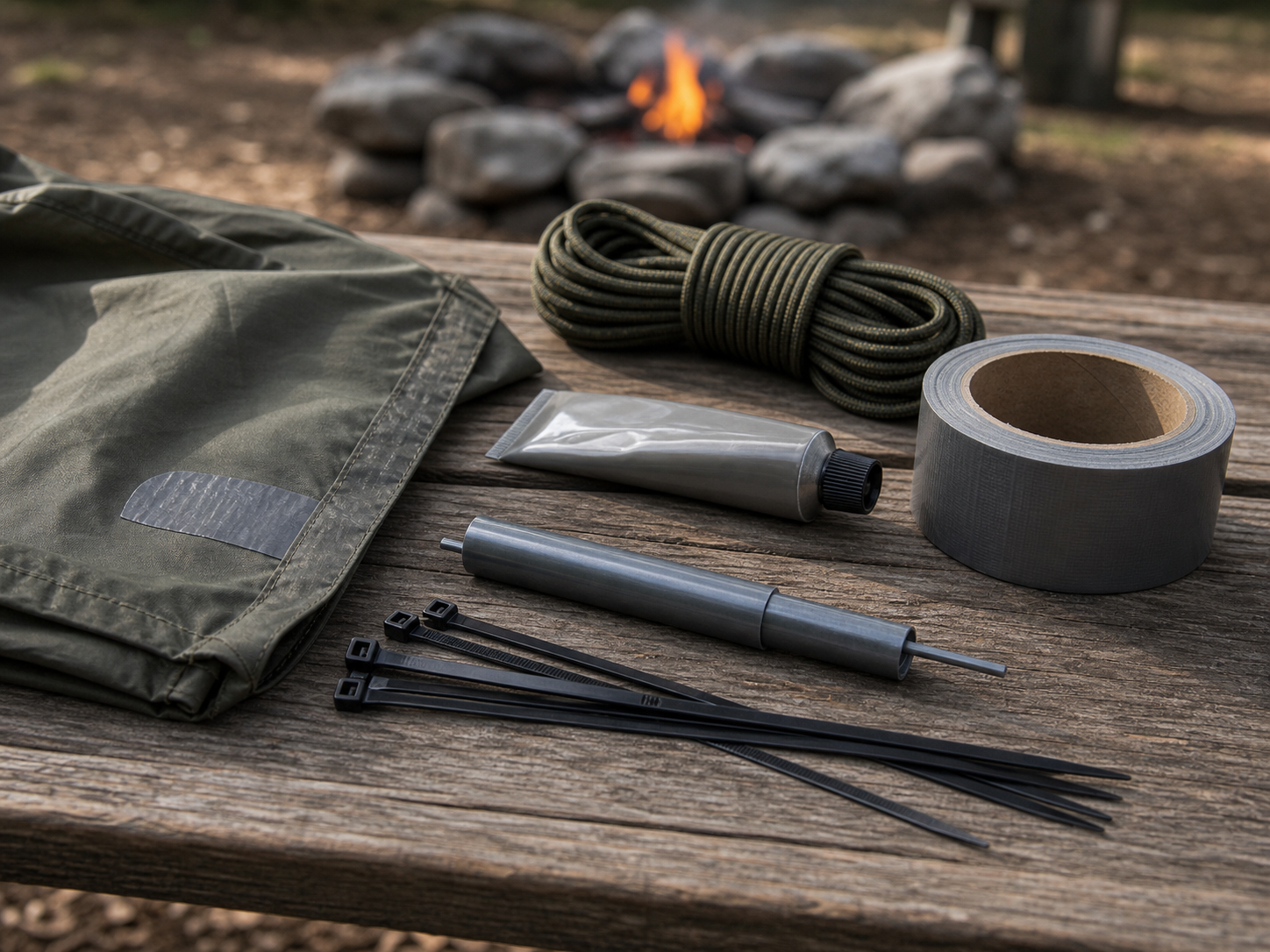
Tent repair supplies, cord, tape, and zip ties laid out on a weathered campsite table

Repair tape, cord, zip ties, and a few patches can solve a surprising number of campsite problems. Beginners do not need a heavy toolbox; they need a small repair kit that can patch, tie, secure, and improvise.

Repair tape and patch kits can help with tents, pads, bags, and other gear that gets scraped or torn. A few small hardware pieces, like cord locks or spare buckles, can also save a trip from getting more annoying than it needs to be.

Practice using repair items at home before a wet tent or torn pad makes the lesson urgent. The best repair kit is boring, organized, and easy to find when something fails.

Below are a few repair and utility items for patching gear, securing small parts, replacing cord, and handling common campsite fixes.

1Gear Aid Tenacious Tape Repair TapeTenacious Tape is one of the most useful small repair items because fabric damage happens across tents, pads, jackets, packs, and tarps. It is best for clean, dry, non-structural repairs that need to stop a small tear from getting worse. It will not fix every failure, but it can keep a small problem from becoming the trip story.
Pros
  • Fast no-sew repairs
  • Useful across many gear types
  • Small enough for every repair kit
Cons
  • Needs clean surfaces
  • Not for major structural failures
  • Adhesion depends on material
2Gear Aid Seam Grip WP Field Repair KitSeam Grip is the slower, more durable repair option when tape alone is not enough. It belongs in a kit for older tents, rainwear, inflatable pads, and seams that need a real seal. The tradeoff is cure time and mess, so it is better for planned repairs or calm camp fixes than frantic storm patches.
Pros
  • Good for seam leaks
  • More durable repair than tape alone
  • Works across tents and rain gear
Cons
  • Needs cure time
  • Messy if rushed
  • Harder to use in wet weather
3Atwood Rope MFG 550 Paracord 100 ftA spool of paracord is useful because campers always seem to need a little cord for tie-outs, bundling, repairs, or improvised campsite organization. It is not climbing-rated and it can turn into a knot pile if ignored, so cut and store it thoughtfully. As a repair-kit staple, though, it earns its spot quickly.
Pros
  • Useful for many campsite fixes
  • Easy to cut to length
  • Good repair-kit staple
Cons
  • Not climbing-rated
  • Can tangle without cord management
  • Overkill if you only need short guylines
4Nite Ize Gear Tie Reusable Rubber Twist Tie 12-Inch AssortedGear Ties are small campsite problem-solvers: bundling cords, hanging a light, taming loose straps, keeping a tarp corner neat, or organizing a camp bin. They are reusable and tool-free, which makes them more useful than they look. Just do not treat them as structural anchors or serious tie-downs.
Pros
  • Reusable and easy to see
  • Useful for cord and gear control
  • No tools needed
Cons
  • Not a structural tie-down
  • Rubber coating can wear
  • Easy to lose
5Gear Aid Tent Pole Splint 0.625 inchA tent pole splint is boring until a pole cracks at the campsite. If the diameter is close enough, it can keep a damaged shelter usable long enough to finish the trip and make a proper repair at home. It is a temporary fix, but that is exactly the job a compact field repair item should do.
Pros
  • Useful trip-saving repair item
  • Small and light
  • Works with many common pole sizes
Cons
  • Must match pole diameter closely
  • Temporary repair only
  • Not useful for every tent style

Shelter Setup and Anchoring

Stakes, guylines, mallets, tarps, and setup pieces for tents and shade shelters.

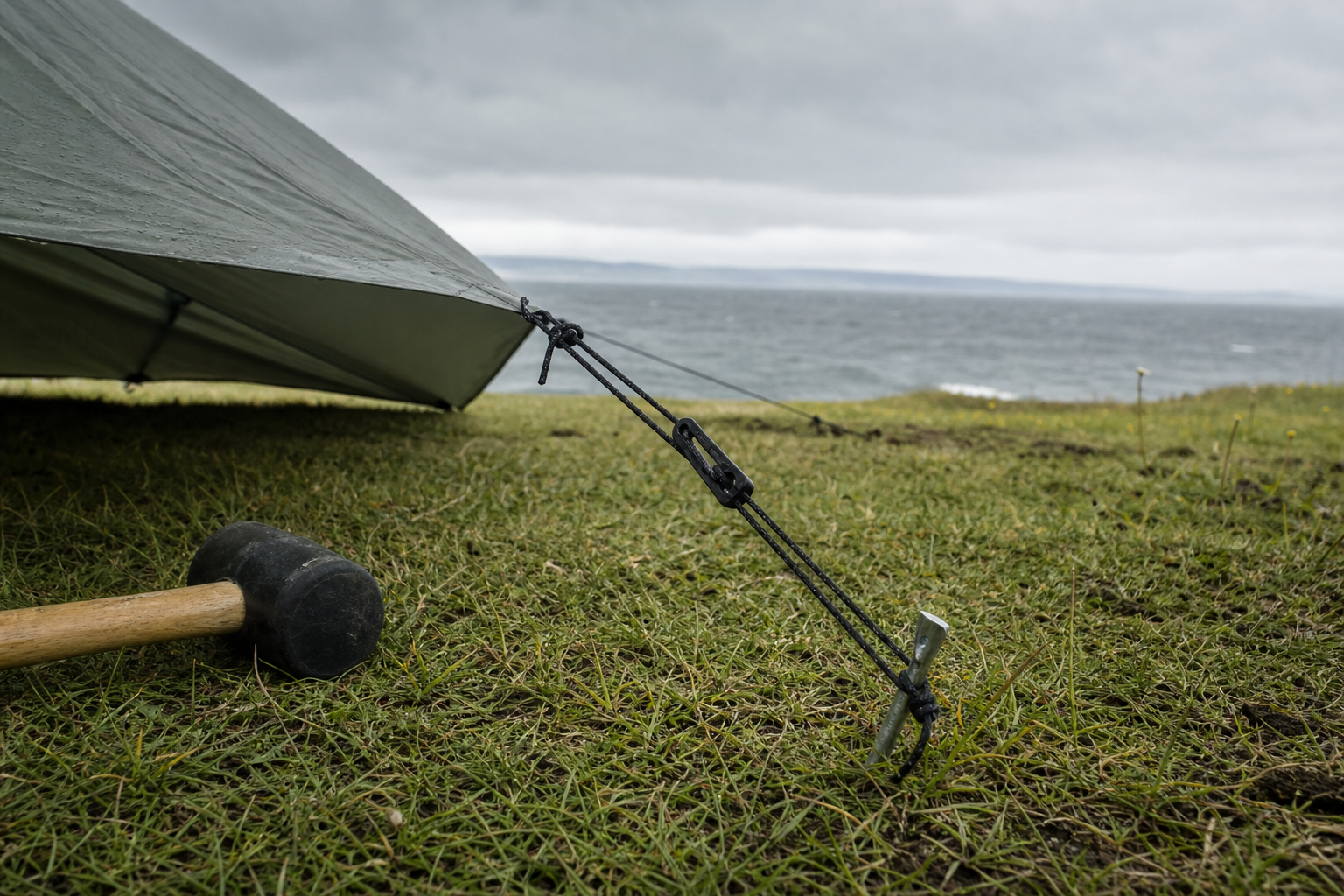
Tarp corner, stake, guyline, and mallet set at a windy coastal campsite

Shelter tools are the quiet helpers of a smooth campsite. Extra stakes, guylines, a small mallet, and a tarp can make a tent more secure in wind, protect gear from rain, and create a cleaner place to sit or cook.

Beginners often discover too late that the stakes included with a tent may not suit hard ground, sand, or windy conditions. Pack a few spares, choose anchors that match your usual terrain, and learn how your tent guylines work before the first storm rolls in.

This section is for the practical setup pieces that make tents, tarps, and shade shelters easier to pitch and keep secure.

Below are a few shelter setup items that can make tents, tarps, and shade shelters easier to secure.

1Coghlan's Tent Peg MalletThis is a cheap car-camping helper that keeps people from pounding stakes with rocks, shoes, or cookware. The built-in puller also makes teardown less annoying when stakes are buried or cold to grab. It is too bulky for backpacking and not meant for rock-hard ground, but for normal campground setup it is useful.
Pros
  • Affordable
  • Integrated stake puller
  • Useful for car-camping setup
Cons
  • Plastic is less durable than metal
  • Too bulky for backpacking
  • Not for very hard ground
2Wise Owl Outfitters Tent Stakes Heavy Duty 16 PackThese stakes are a practical upgrade when the thin ones that came with a tent bend, vanish, or fail in ordinary ground. A 16-pack gives enough anchors for the tent, guylines, tarp corners, and a few spares. They are not specialty anchors for sand or snow, but they are a useful general-purpose shelter upgrade.
Pros
  • Stronger than many included stakes
  • Sixteen-pack covers spares
  • Works for tents and tarps
Cons
  • Not ideal for deep sand or snow
  • Still easy to lose
  • Less proven than premium stake brands
3Orange Screw Ultimate Ground Anchor Small 4-PackOrange Screws make the most sense in soft ground, loose soil, shade-shelter setups, and tarp corners where normal stakes do not hold well. They are bulkier and slower than simple stakes, so they are not needed for every tent. When the ground is right, the extra holding power can be worth the space.
Pros
  • Strong hold in soft ground
  • Bright and easy to spot
  • Useful beyond tents
Cons
  • Bulkier than normal stakes
  • Overkill for firm ground
  • Takes time to screw in
4Nite Ize Reflective Rope PackReflective rope is helpful when guylines and tarp lines turn into ankle traps after dark. It also works as general utility cord for campsite organization and tie-outs. It still needs smart setup and tensioning, and it is not safety-rated rope, but the visibility makes a real difference around a busy campsite.
Pros
  • Improves nighttime visibility
  • Useful for tarps and guylines
  • Easy to cut to custom lengths
Cons
  • Not climbing-rated
  • Cord management still matters
  • May be more cord than one tent needs
5Aqua Quest Defender Tarp 10 x 10 ftThe Defender tarp is for campers who want real utility coverage instead of a throwaway sheet of plastic. It can create shade, protect gear from rain, cover a cooking area, or give you a cleaner ground layer. The tradeoff is that tarps require cord, anchors, and some practice before the weather turns ugly.
Pros
  • Durable waterproof coverage
  • Useful for shade and rain planning
  • Multiple tie-out points
Cons
  • Heavier than ultralight tarps
  • Needs cord and anchors
  • Can be noisy in wind

Fire, Stove, and Weather Safety

Fire starters, gloves, shovels, water buckets, and weather-alert basics for safer camping.

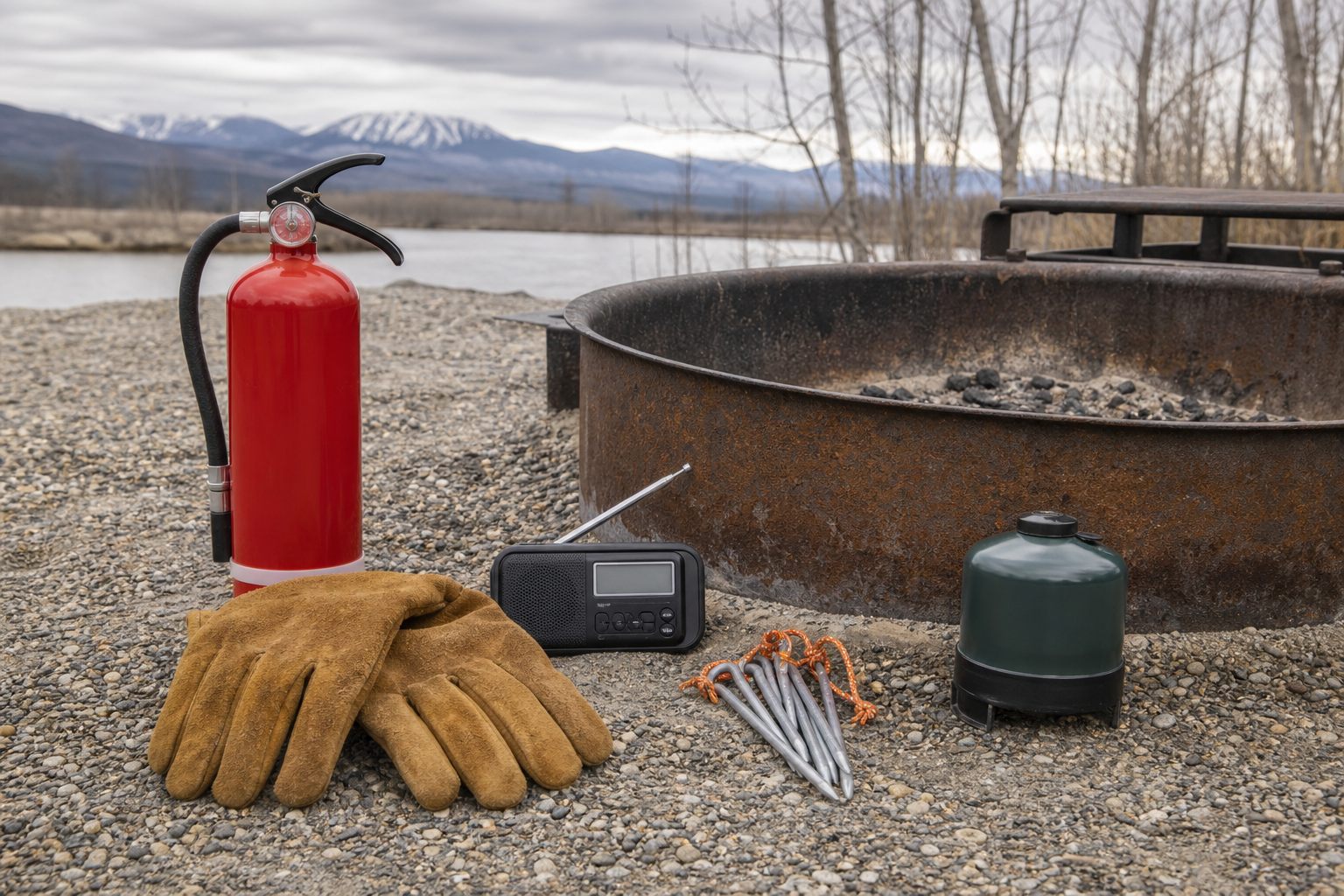
Fire extinguisher, gloves, weather radio, stakes, and stove safety gear by a fire ring

Fire tools should be treated as safety gear, not just convenience gear. Before using a campfire or stove, check local restrictions and use established fire rings where they are provided.

Keep water and a shovel nearby, fully drown and stir ashes until cold, and never use stoves, lanterns, charcoal, or fuel-burning heaters inside a tent or enclosed shelter because of carbon monoxide risk.

A weather radio or reliable alert source is also worth considering when cell service is weak, especially in storm-prone areas. This section is about staying prepared without making the kit complicated.

Below are a few items that support safer cooking, fire management, and weather awareness while camping.

1UCO Stormproof Sweetfire Fire Starter PointsSweetfire points belong in the “legal campfire backup” part of the kit, not in the “ignore restrictions” part. They make starting a permitted fire easier when wood or weather is not cooperating. They are single-use and still require water nearby, a proper fire ring, and the patience to put the fire fully out.
Pros
  • Stormproof starter format
  • Small enough for a safety kit
  • Useful when fires are allowed
Cons
  • Not a reason to ignore fire restrictions
  • Single-use pieces
  • Still needs safe fire management
2SOTO Pocket Torch w/ Refillable LighterThe Pocket Torch gives a more focused flame than a basic lighter, which can help with stove lighting and fire-starting tasks when conditions are allowed and safe. It is compact, but it depends on the compatible lighter and fuel setup. Store it carefully and keep it out of tents or enclosed shelters.
Pros
  • More focused flame than a basic lighter
  • Compact
  • Useful for stove and fire-starting tasks
Cons
  • Requires compatible lighter/fuel
  • Must be stored safely
  • Not needed if you avoid fires
3Sea to Summit Folding Bucket 10LThe Folding Bucket is one of those simple pieces that becomes useful in several parts of camp. It can haul water, sit near a legal fire ring as backup, help with dishes, or make cleanup easier away from natural water sources. It is floppy when full, so carry it with two hands and let it dry before storage.
Pros
  • Packs small
  • Useful for water near camp
  • Doubles for dish cleanup
Cons
  • Flexible shape takes care to carry
  • Needs drying before storage
  • Not a rigid bucket
4Gerber Gorge Folding ShovelThe Gorge is a compact car-camp utility shovel for ash management where allowed, minor site cleanup, and basic digging chores. It is not backpacking-light and it is not for major digging. The important part is that fire rules still come first; the shovel supports responsible cleanup, it does not create permission.
Pros
  • Compact folding design
  • Useful around legal fire rings
  • More capable than improvised tools
Cons
  • Heavy for backpacking
  • Not for serious digging
  • Fire rules still come first
5Midland ER310 Emergency Crank Weather RadioThe ER310 is useful when the campsite has weak cell service or the forecast looks unsettled. NOAA alerts, a light, and multiple power options make it a practical safety item for car camping and basecamp use. Hand-crank charging should be treated as emergency backup, not the main plan for keeping it powered.
Pros
  • NOAA weather alerts
  • Multiple power options
  • Built-in flashlight and SOS features
Cons
  • Hand-crank charging is slow
  • Antenna can be fiddly
  • Costs more than basic radios

First Aid and Emergency Basics

First aid, blister care, emergency blankets, whistles, and small safety basics.

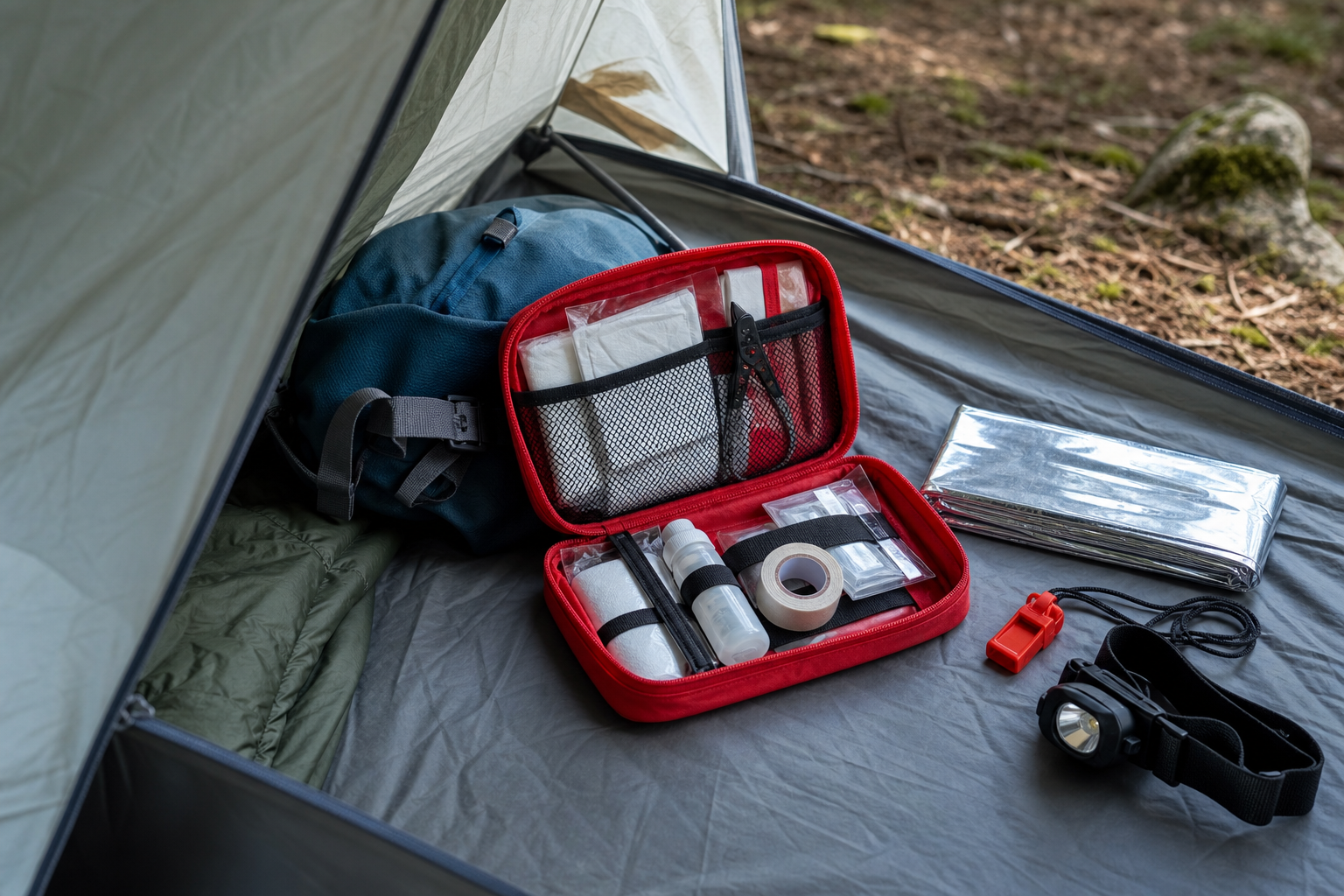
Open first aid kit, emergency blanket, whistle, and headlamp in a tent vestibule

A first aid kit is most useful when it is easy to reach and matched to the trip. A prebuilt kit is a good beginner starting point, but it is worth adding personal medications, blister care, insect bite treatment, sunscreen, and anything your group regularly needs.

Gear is only part of being prepared. Know where the kit is, check expiration dates, and learn basic first aid before you need it. For car camping, it is also smart to keep a whistle, emergency blanket, and backup light with the kit.

This section is not here to make camping feel scary. It is here because small problems are much easier to handle when the basics are packed and easy to find.

Below are a few practical emergency basics that beginners can understand, maintain, and actually carry.

1Adventure Medical Kits Mountain Series Backpacker Medical KitThis Backpacker kit is a better base for small groups or longer weekends than a tiny first-aid pouch. It gives you more organized coverage for wound care, blister issues, medications, and common outdoor problems. It still needs personal medication, restocking, and basic know-how, but it is a stronger starting point for group camping.
Pros
  • Outdoor-focused organization
  • Includes wound, blister, medication, and trauma basics
  • Good base for group camping
Cons
  • Not fully water resistant
  • Needs personal medications added
  • Should be checked and restocked
2Adventure Medical Kits Blister Medic KitBlister care is easy to skip until one bad heel ruins the rest of a hike. This small kit is useful for campground walks, day hikes, and anyone trying new footwear. It works best when used early on hot spots, because waiting until a blister is already angry makes every step harder.
Pros
  • Small enough for any kit
  • Includes moleskin and blister dressings
  • Useful add-on to basic first aid
Cons
  • Limited quantities
  • Technique matters
  • Best used before hot spots get severe
3SOL Emergency Blanket 4-PackThe SOL blanket pack is cheap, compact backup for warmth and visibility in a car-camping safety pouch. It is not comfort gear and it should not replace real insulation, but it is useful when someone gets chilled, wet, delayed, or separated from their normal layers. A multi-pack also makes sense for families or small groups.
Pros
  • Very compact
  • High-visibility color
  • Useful as emergency warmth backup for a small group
Cons
  • Emergency-only warmth
  • Can trap condensation
  • Not a sleeping system
4Fox 40 Classic Pealess WhistleA whistle is one of the smallest safety items that actually changes how far you can be heard. The Fox 40 is loud, simple, and works better than shouting if someone needs attention at camp or on a short hike. It does not replace navigation or communication planning, but it is worth stashing in the kit.
Pros
  • Works when wet
  • Small and cheap
  • Louder than shouting for signaling
Cons
  • Color or lanyard variant may vary
  • Painfully loud close up
  • Does not replace navigation or communication planning
5Tick Twister Tick Remover SetThis little tick tool set is worth packing in tick-prone areas because removal technique matters. The two sizes help with different ticks, and the tool takes almost no room in a first-aid pouch. It still belongs alongside prevention, tick checks, and fine-tipped tweezers when appropriate.
Pros
  • Very small and easy to pack
  • Includes two sizes
  • Avoids squeezing the tick body when used correctly
Cons
  • Technique still matters
  • Fine-tipped tweezers may still be needed
  • Prevention and tick checks still matter