Camp Gear Advisor
Sleeping bag near a campfire
Back to gear hub

Sleeping Bags

Sleeping bags look simple from the outside, but the right choice depends on where you camp, how cold the night may get, and whether you are carrying the bag on your back or tossing it in the car. Beginners do not need to chase the most technical option. Start with your expected overnight low, choose a bag with a little warmth margin, and remember that your sleeping pad is part of the system.

As an Amazon Associate, Camp Gear Advisor may earn from qualifying purchases. Prices and availability can change, so check the product page for current details before buying.

Warm Weather Sleeping Bags

Lighter bags for summer nights, cabins, and mild warm-weather trips.
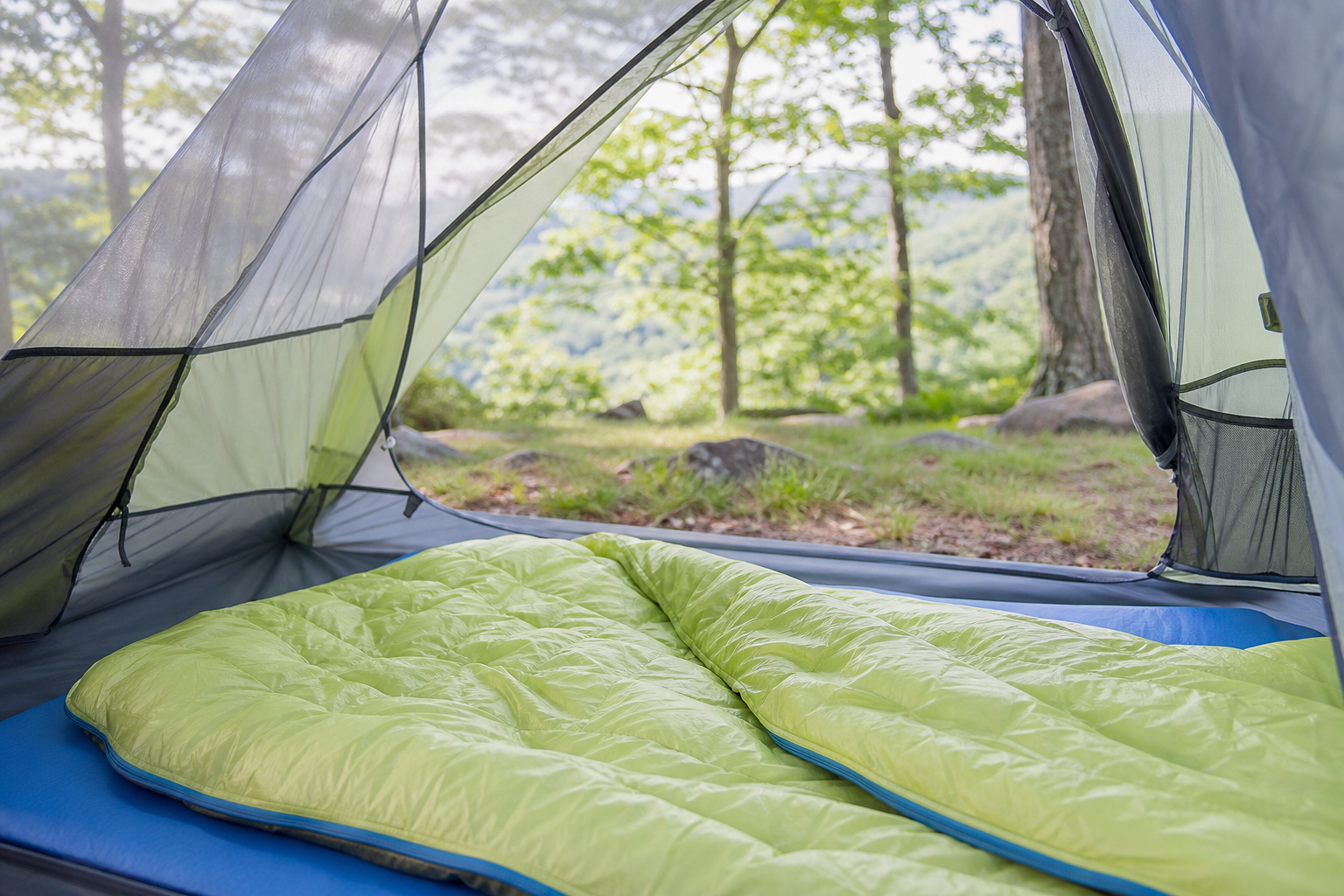
Light green warm-weather sleeping bag inside an airy mesh tent

Warm weather bags are for mild summer nights, cabins, backyard campouts, and casual campground trips where overheating is more likely than serious cold. For many beginners, a bag rated around 40 degrees Fahrenheit or higher is enough when nighttime lows stay comfortably above freezing.

Look for breathable fabrics, a roomy shape, and a zipper that lets you vent the bag or open it flat like a blanket. Rectangular bags and light camp quilts work well here because they give you space to move and are easy to adjust when the night starts warm and cools off later.

The main mistake is buying too much insulation just in case. A warmer bag can be uncomfortable in summer, and once you are sweating, sleep gets worse. If conditions are only mildly cool, it is often easier to add dry layers than to fight a bag that is too hot.

Below are a few options for mild-weather camping where comfort, airflow, and easy venting matter more than maximum warmth.

1Kelty Galactic 30 Sleeping BagThe Galactic is for campers who dislike tight mummy bags but still want something nicer than a bulky bargain rectangle. It feels more relaxed for mild campground nights and can work well when comfort matters more than maximum thermal efficiency. Because it uses down, it packs better than many rectangular bags, but it still needs sensible moisture care.
Pros
  • Roomy rectangular shape
  • Down fill packs better than many car-camp bags
  • Can unzip flat like a blanket
Cons
  • Not a cold-weather bag
  • Down needs moisture care
  • Still bulkier than backpacking mummy bags
2Coleman Sun Ridge 40F Sleeping BagThe Sun Ridge is a basic warm-weather bag for summer campouts, cabins, sleepovers, and mild campground weekends. It is inexpensive and easy to understand, which is exactly why it fits casual use. The tradeoff is that it is bulky and not built for cold nights, so pair it with realistic weather expectations.
Pros
  • Low-cost warm-weather option
  • Easy rectangular shape
  • Good for casual campground use
Cons
  • Basic materials
  • Bulky for backpacking
  • Not enough warmth margin for cold nights
3The North Face Dolomite One Sleeping BagThe Dolomite One is a comfort-first bag for campers who want flexibility across changing temperatures. Its layered setup lets you adjust warmth without buying a separate bag for every season, which is helpful for families and uncertain forecasts. It is heavier and more expensive than simple summer bags, but the versatility is the reason to consider it.
Pros
  • Layered design adapts to changing temperatures
  • Roomy rectangular comfort
  • Useful across more than summer
Cons
  • More pieces to manage
  • Heavier than backpacking bags
  • Costs more than basic warm-weather bags
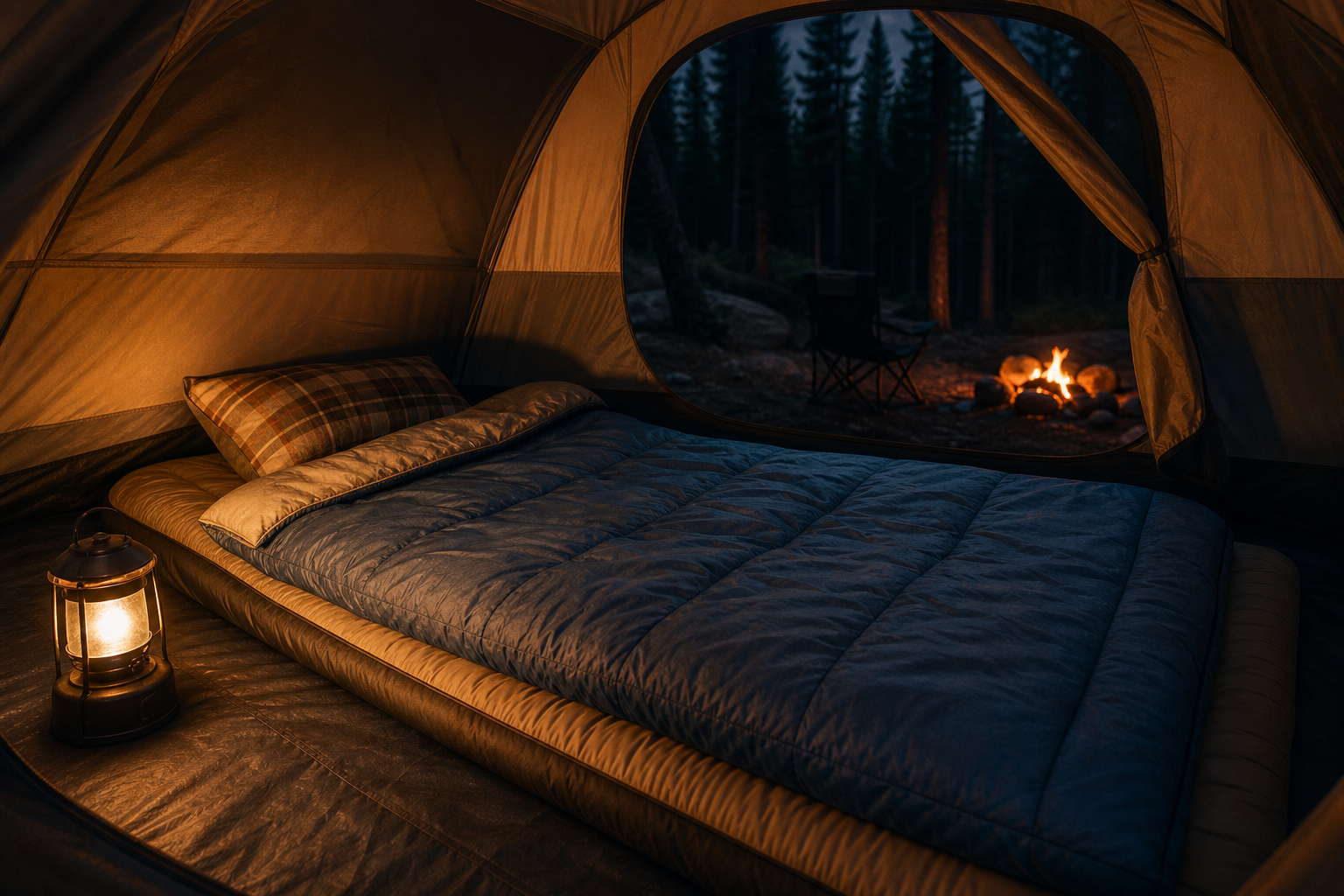
Car Camping Sleeping Bags

Roomier bags for campers who can prioritize comfort over packed size.

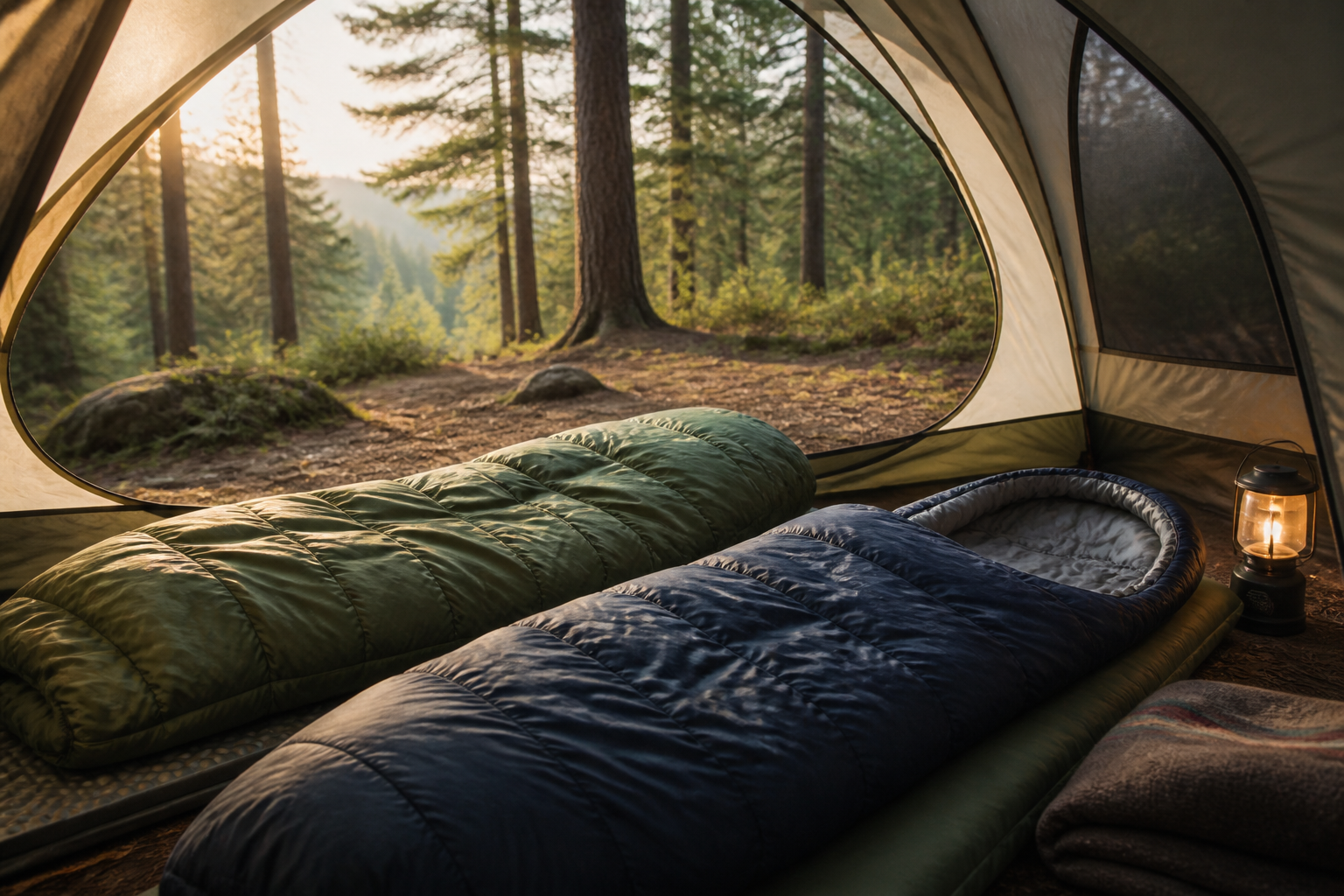
Roomy car-camping sleeping bag inside a warmly lit tent at dusk

Car camping is the easiest place for beginners to prioritize comfort. Since you are not carrying the bag far, packed size and weight matter less than room, softness, warmth, and whether you can sleep naturally without feeling pinned in.

Rectangular and semi-rectangular bags are usually the most beginner-friendly choices. They give you room to roll over, unzip easily for ventilation, and can often be used more like bedding than technical trail gear. This is also where oversized bags, double bags, and softer linings make sense.

Temperature rating still matters, but car campers can usually choose a little more warmth because weight is not the tradeoff. Pair the bag with a decent sleeping pad or camp mattress, change into dry sleep clothes, and avoid breathing inside the bag in cold weather because moisture can make you colder.

Below are a few picks for campground trips where packed size is less important and a better night of sleep is the real goal.

1Coleman Brazos 20/30F Sleeping BagThe Brazos is a low-cost car-camping bag for people who need something simple, warm enough for mild-to-cool nights, and easy to pack into a starter kit. It is roomy and familiar, which helps campers who do not sleep well in tight mummy bags. Treat the temperature rating conservatively and use a real sleeping pad underneath.
Pros
  • Very affordable starter bag
  • Roomier rectangular shape
  • Good for mild-to-cool car camping
Cons
  • Bulky for backpacking
  • Temperature rating should be treated conservatively
  • Basic comfort materials
2Kelty Tru.Comfort 20 Doublewide Sleeping BagThe Tru.Comfort Doublewide is for couples who want car-camping sleep to feel closer to a bed than two narrow mummy bags. The adjustable top layers help when two sleepers run at different temperatures, and the wide shape makes it easier to settle in. It is heavy and bulky, but that matters less when the car is nearby.
Pros
  • Roomy two-person comfort
  • Adjustable blanket layers help partners
  • Good campground sleep setup
Cons
  • Heavy and bulky
  • Not trail practical
  • Expensive compared with single bags
3TETON Sports Polara 3-in-1 Sleeping BagThe Polara is a flexible car-camping bag for people who camp across mixed temperatures and do not want a narrow mummy shape. The layered design gives more adjustment than a single basic rectangular bag, especially for shoulder-season trips. It is too bulky for backpacking and has more pieces to manage, but that tradeoff makes sense near the car.
Pros
  • Layered warmth options
  • Roomy car-camping comfort
  • Verified Amazon direct product link
Cons
  • Heavy and bulky
  • Not trail practical
  • Too warm for hot summer nights

Lightweight Backpacking Sleeping Bags

Compact bags for campers who need sleep gear that carries well on the trail.

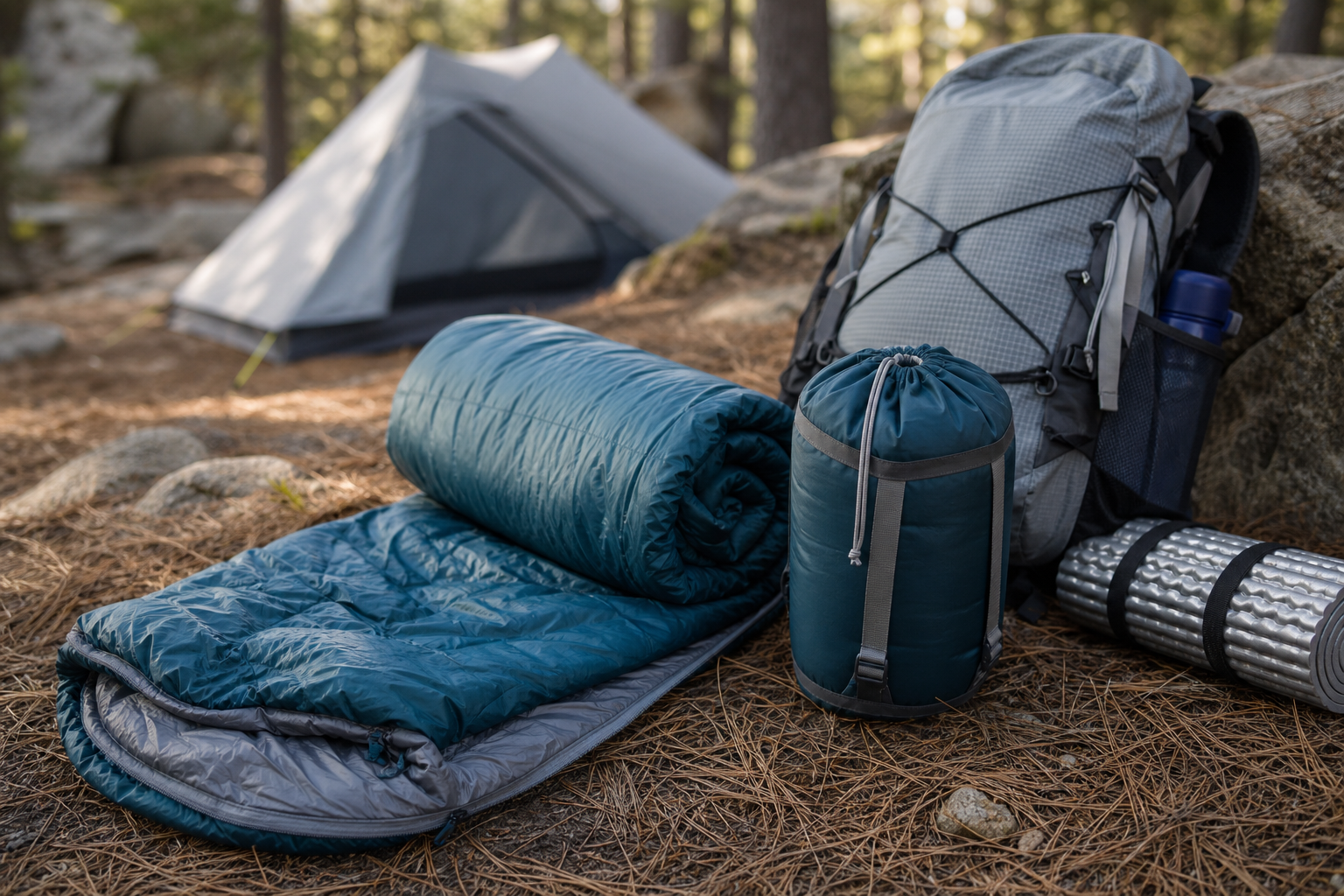
Lightweight mummy sleeping bag beside a backpacking tent on a misty trail

Backpacking bags are built around the reality that every ounce and every inch of pack space matters. They are usually narrower, lighter, and more compressible than car camping bags, which can feel less roomy at first but makes a big difference once you are carrying your sleep system on trail.

Mummy bags and backpacking quilts are common because they reduce extra space your body has to warm. Down insulation is popular when low weight and small packed size matter most, while synthetic insulation is usually more affordable and more forgiving around moisture.

Beginners should avoid going ultralight too quickly. Choose a bag that matches the coldest temperatures you realistically expect, and remember that the sleeping pad affects how warm the whole setup feels. A light bag on an under-insulated pad can still make for a cold night.

Below are a few options for campers who need a sleep setup that balances warmth, packed size, and trail weight.

1Sea to Summit Spark Pro 15F Down Sleeping Bag, LongThis is the premium lightweight pick for backpackers who are ready to pay for warmth, compression, and lower pack weight. The Spark Pro makes the most sense for real trail use, not casual car camping. It is expensive and more delicate than budget bags, but the corrected CTA now points to a single-person 15-degree Spark-family bag instead of a double variant.
Pros
  • Excellent warmth-to-weight ratio
  • Compresses very small
  • Strong fit for weight-conscious backpacking
Cons
  • Expensive
  • Trim mummy fit is not for everyone
  • Delicate shell needs care
2Kelty Cosmic 20 Down Sleeping BagThe Cosmic 20 is the approachable down backpacking pick: warmer and more packable than budget synthetic bags, but less expensive than premium ultralight models. It is a good fit for campers building a first real backpacking sleep kit. The CTA now matches the current Cosmic 20 product family instead of a short-size mismatch.
Pros
  • Lower-cost down option
  • Backpacking-capable warmth
  • More approachable than ultralight bags
Cons
  • Heavier than premium down bags
  • Bulkier packed size
  • Public proof is thinner than the top pick
3Coleman North Rim 0F Big & Tall Mummy Sleeping BagA budget cold-weather mummy-style bag for campers who need more warmth margin without premium pricing. It is heavy and bulky, so it makes more sense for car camping than backpacking. The big-and-tall fit is helpful for larger sleepers, but the rating should still be treated conservatively with an insulated pad underneath.
Pros
  • Affordable mummy-bag option
  • Synthetic insulation avoids down moisture worries
  • Verified Amazon direct product link
Cons
  • Heavy for backpacking
  • Bulky packed size
  • Temperature rating should be treated conservatively

Cold Weather Sleeping Bags

Warmer insulated bags for chilly campsites and lower overnight temperatures.

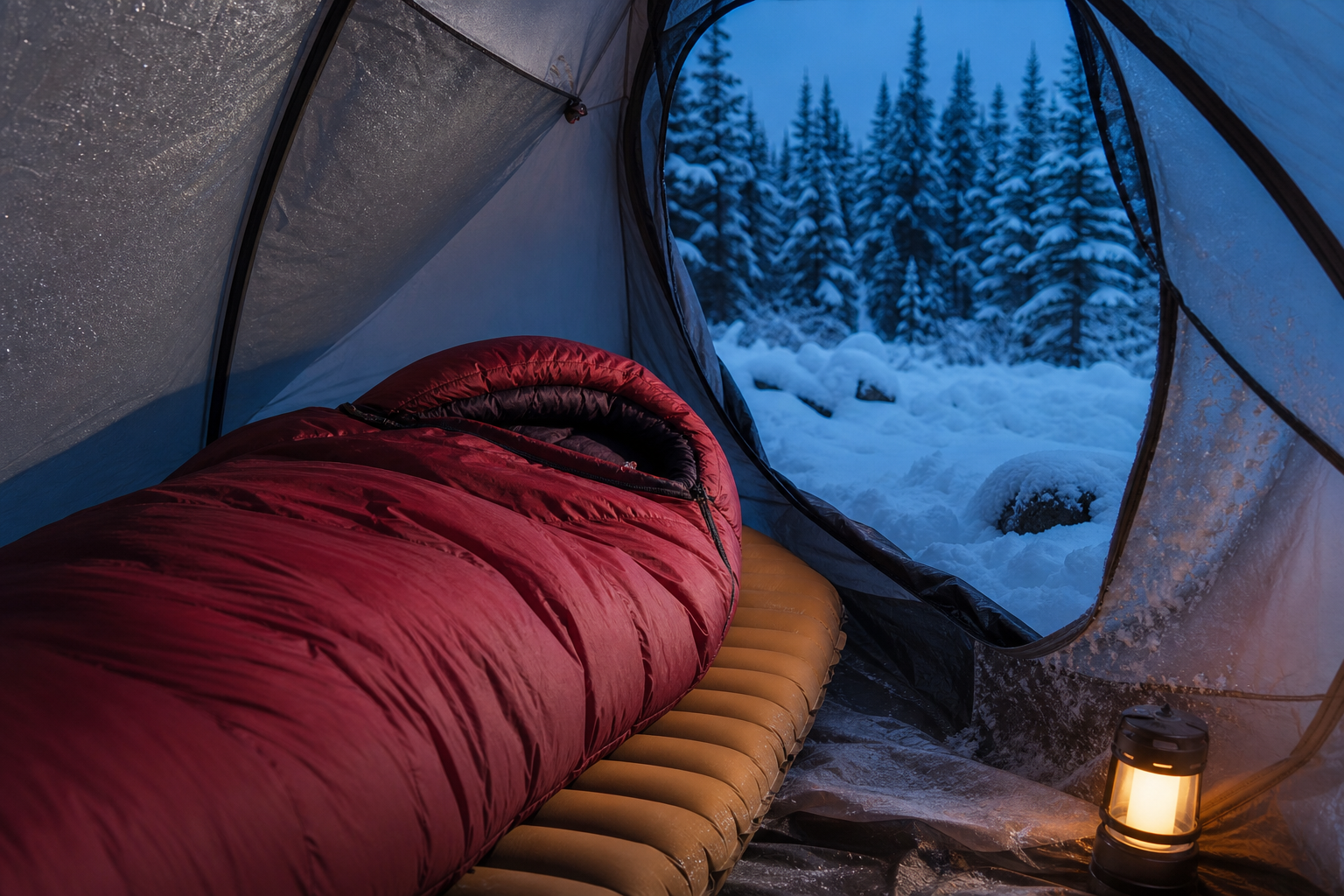
Red cold-weather mummy sleeping bag inside a tent facing snowy woods

Cold weather bags are for chilly shoulder-season trips, higher-elevation campsites, and anyone who knows they sleep cold. In this category, it is wise to choose a bag rated lower than the temperatures you expect, because ratings are estimates and real nights include wind, humidity, tired bodies, and imperfect sleep setups.

Look for features that help hold warmth: a fitted shape, insulated hood, draft tube along the zipper, and possibly a draft collar near the neck. Mummy bags are common because they reduce empty space and keep warm air close to your body.

The sleeping pad becomes especially important when temperatures drop. Cold ground can pull heat away even when the bag itself is warm. For beginners, a cold-weather setup should be treated as a full sleep system: warm bag, insulated pad, dry base layers, warm socks, and enough margin for surprise temperature dips.

Below are a few options for colder nights where warmth, fit, and a complete sleep system matter more than roomy comfort.

1Coleman North Rim 0F Big & Tall Mummy Sleeping BagThe North Rim is a budget cold-weather mummy-style bag for campers who need more warmth margin without premium pricing. It is heavy and bulky, so it makes far more sense for car camping than backpacking. The big-and-tall fit helps larger sleepers, but the temperature rating should still be treated conservatively with an insulated pad underneath.
Pros
  • Affordable cold-weather option
  • Mummy hood helps retain warmth
  • Roomier big-and-tall fit
Cons
  • Heavy and bulky
  • Rating should be treated conservatively
  • Basic materials compared with premium bags
2Coleman Heritage Big & Tall 10F Flannel Sleeping BagThe Coleman Heritage is for car campers who want a warmer, roomier bag with a more familiar bedding feel. The flannel-style lining and larger cut can be more comfortable for people who dislike tight mummy bags. It is bulky and not trail gear, but for campground trips where comfort matters, that is a reasonable tradeoff.
Pros
  • Roomy big-and-tall fit
  • Flannel lining feels familiar for car camping
  • More affordable than rugged canvas bags
Cons
  • Bulky for storage
  • Too heavy for backpacking
  • Temperature rating should be treated conservatively
3TETON Sports Polara 3-in-1 Sleeping BagUsed as a colder-weather car-camping option, the Polara gives campers more flexibility than a single basic bag. The layered setup can be adjusted as the night changes, which is helpful on shoulder-season trips where temperatures swing. It is not compact, but for campsite use it gives you more ways to manage warmth without buying several bags.
Pros
  • Layered system expands comfort range
  • Roomy for car camping
  • Useful when temperatures vary
Cons
  • Too bulky for backpacking
  • More parts to manage
  • Warmth rating should be treated conservatively