Stoves and Fuel
The heat source for coffee, simple meals, boiling water, and basic campsite cooking.
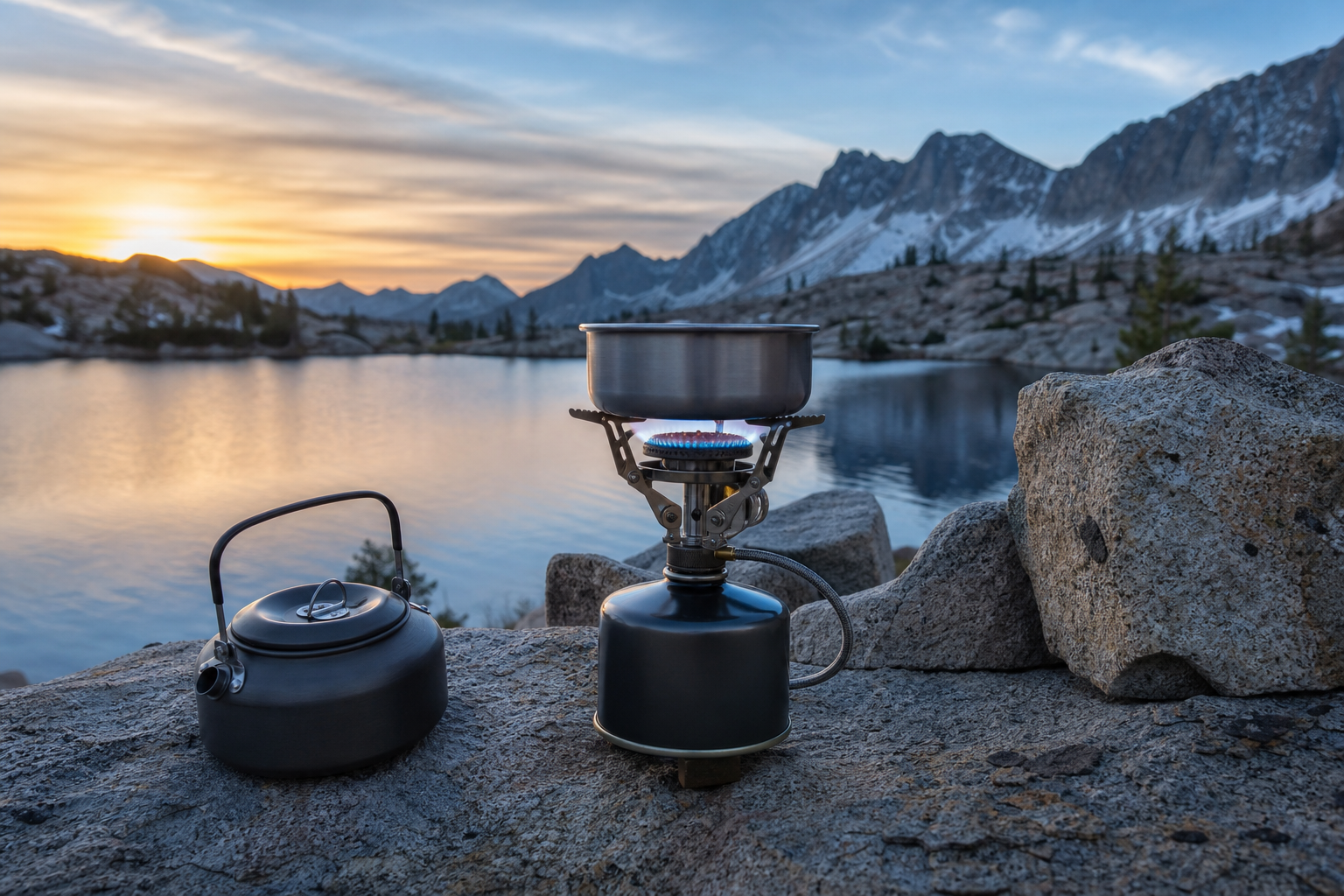
A stove gives beginners a more reliable way to cook than counting on a campfire. Fires may be restricted, slow to get ready, or hard to cook over evenly. A stove makes simple things like coffee, oatmeal, pasta, soup, and one-pan meals much easier to plan around.
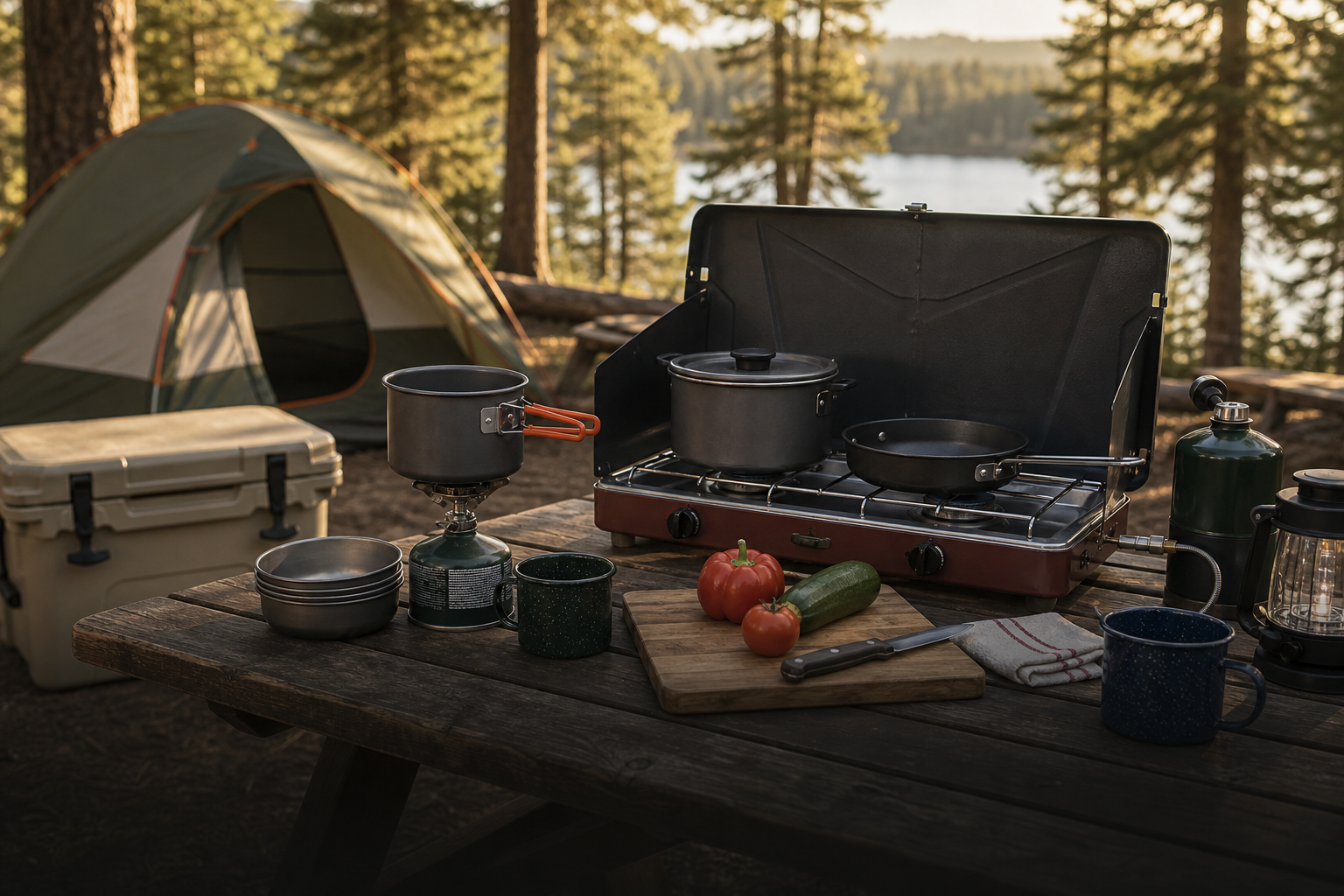
The right stove depends on the meals you want to make and how many people you are feeding. A small canister stove can be enough for boiling water and simple meals, while a two-burner stove gives you more room if you want to cook for a group or use a pot and pan at the same time.
Fuel matters too. Canister stoves are usually easy for beginners, but fuel canisters are not refillable. Liquid-fuel stoves can work better in cold weather and at higher elevations, but they take more practice. Wood-burning stoves depend on local rules and fire conditions, so they are not always the safest first choice.
Below are a few stove and fuel-related options that can make campsite cooking easier to manage.
Pros
- Strong wind performance for its size
- Good simmer control
- Light enough for backpacking
Cons
- Small pot support compared with car-camp stoves
- Canister dependent
- Only one burner
Pros
- Powerful burners
- Useful room for two pans
- Good simmer control for car camping
Cons
- Bulky
- Pricier than basic two-burner stoves
- Too large for backpacking
Pros
- Very fast boil times
- Beginner-simple setup
- Efficient for hot drinks and pouch meals
Cons
- Mostly boil-only
- Limited pan cooking
- Uses compatible fuel canisters
Pros
- Accessible price
- Two burners for simple meals
- Common propane format
Cons
- Less refined flame control than premium stoves
- Bulky for storage
- Public proof is weaker than higher-end picks